Digital Assets in Canadian Family Law: Digital Assets Are Family Property. Treat Them That Way.

Digital Assets in Canadian Family Law
Identification, valuation, and division for lawyers and their clients.
This series is for family lawyers, and for clients who hold digital assets or may be entitled to them. Three posts, each meant to stand alone.
- Growing ownership, and why digital assets belong on the financial statement - what these holdings are, how common they now are in Canada, and how to describe them so valuation and tax work can follow.
- Price volatility and the valuation date - why a Canadian-dollar figure taken on one date may not fully describe Bitcoin, Ethereum, BNB, or XRP, and how later price movement can fall on one spouse.
- Division, tax cost base, and evidence - how to transfer the assets, how adjusted cost base travels with them, and what court-ready documents look like.
These posts are based on our CEO’s co-authored paper “Digital Assets in Family Law” as presented to the National Family Law Program, June 2026. CLICK HERE to download the full paper by Christine Murray, LLB and Regan McGrath, CPA.
What follows is Part 1. It is information, not legal or tax advice.
Part 1: Digital Assets Are Family Property. Treat Them That Way.
Digital assets held on an exchange or in a private wallet are property. In Canadian family law they belong in the same pool as a bank account, an RRSP, and the family home. They must be identified, valued, and divided.
That is no longer a niche file. The Ontario Securities Commission’s Crypto Assets Survey 2025 found that 25% of Canadian adults currently own crypto assets or crypto funds, up from 10% in 2023. Nearly 60% of Canadians can identify what a crypto asset is. Nearly 40% of active investors hold a crypto product.
At Metrics CPA we are seeing more family-law files that include cryptocurrency and other digital assets. A year-end or disclosure statement that lists “Bitcoin” or “ETH” is only a snapshot of quantity and, sometimes, a Canadian-dollar value on that day. Three further questions usually matter more, and they are harder: what income or rewards attach to the holding, what is the tax liability on disposition, and what the asset is actually worth for equalization. Getting the description right is the first step.
What counts as a digital asset in a family file
Digital assets are records of value created, stored, and transmitted electronically, with associated ownership or use rights. In family files they most often appear as:
- cryptocurrencies such as Bitcoin (BTC), Ethereum (ETH), BNB, and XRP;
- fiat-backed stablecoins such as Tether (USDT);
- balances on a Canadian crypto trading platform or in a self-custody wallet;
- positions in decentralized finance (DeFi), including lending deposits, liquidity-pool shares, and staked or wrapped tokens;
- non-fungible tokens (NFTs) and other digital collectibles; and
- crypto funds, including Bitcoin ETFs held in a brokerage account.
Market prices for widely traded cryptocurrencies are published on sites such as CoinMarketCap and CoinGecko. Those sites list each asset’s current price and its market capitalization (price multiplied by the number of units in circulation). That is the usual source for a fair-market-value snapshot on a financial statement.
Not every item above has a reliable public price. Liquid coins and ETFs generally do. Many NFTs and some DeFi positions do not. All of them still have to be identified before they can be valued or divided.
Regulators may treat one holding as a commodity, another as a security, and a stablecoin as something closer to cash. For family-law division that label is not the main point. All of these holdings are property. What does change the net result is tax treatment: whether rewards are income, whether a transfer or sale is a disposition, and what tax arises on that disposition. Those questions belong on the file with the asset list, not after the settlement is signed.
Canadian decisions have not yet gone far into smart-contract attributes or the tax that travels with them. Disclosure still should. If DeFi is on the file, flag it early and consider hiring a specialist who can help with cost and valuation.
The top five cryptocurrencies — and why Tether is different
As of late August 2026, the five largest cryptocurrencies by market capitalization remain Bitcoin (BTC), Ethereum (ETH), Tether (USDT), Binance (BNB), and Ripple (XRP).
- Bitcoin (BTC) remains the original and most established cryptocurrency, often described as “digital gold.” It functions as a store of value and the foundational asset of the crypto ecosystem, with a fixed supply and strong institutional adoption through ETFs.
- Ethereum (ETH) is the leading smart-contract platform. Its native token, ETH, pays network fees and powers decentralized applications, DeFi, and NFTs, extending well beyond simple value transfer.
- Tether (USDT) is the largest dollar-pegged stablecoin. It is designed to hold a relatively stable 1:1 value with the U.S. dollar and is widely used for trading, remittances, and as a bridge between traditional finance and crypto markets.
- Binance (BNB) is the native utility token of the BNB Chain and Binance ecosystem.
- Ripple (XRP) was designed for fast, low-cost cross-border payments on the XRP Ledger.
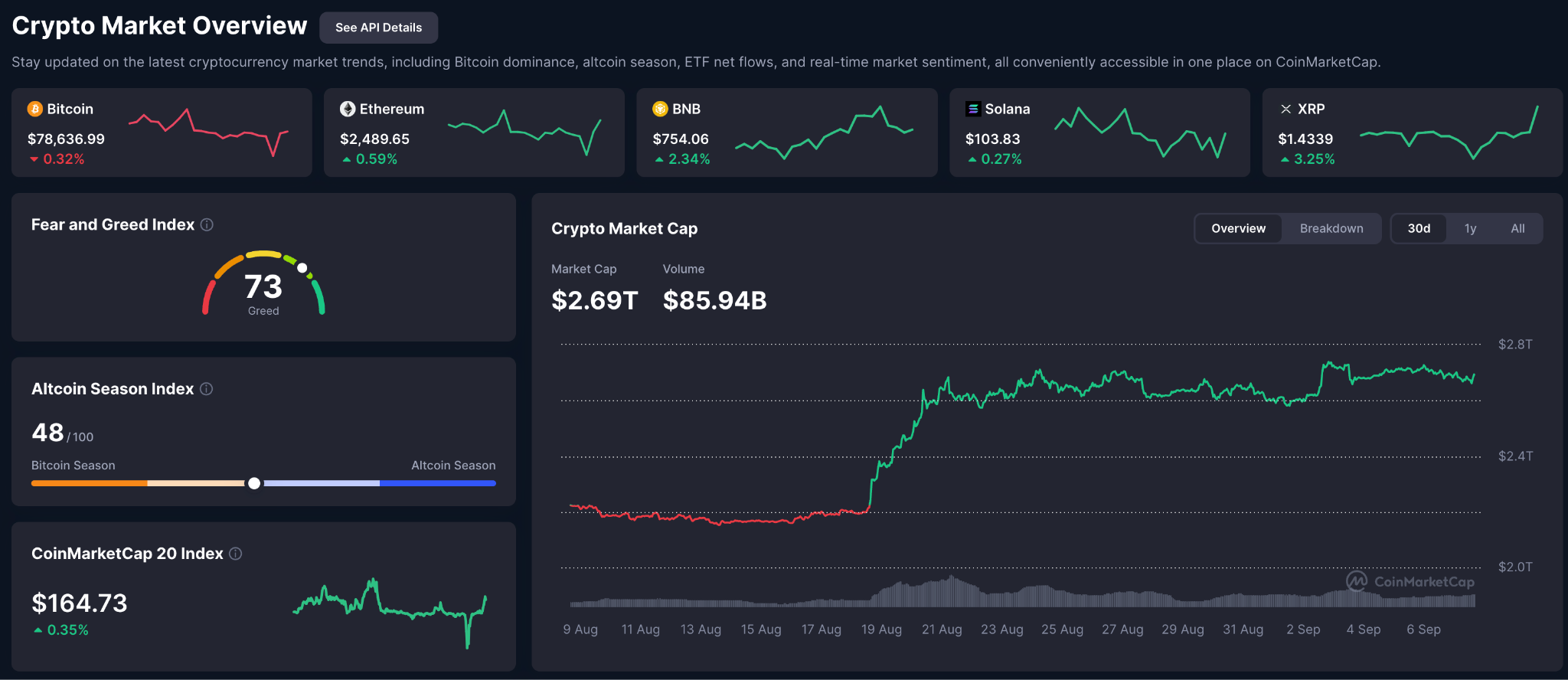
Four of those names have floating market prices. One does not.
Tether sits in the top five by market capitalization only. It is a fiat-backed stablecoin: the issuer holds reserve assets and targets a one-to-one U.S. dollar price. Day to day, the USDT/USD price stays at or very near $1.00. Bitcoin, Ethereum, BNB, and XRP are not built that way. Their market prices move.
For a family-law statement, a disclosed USDT balance is usually valued as quantity × approximately USD 1.00, then converted to CAD if the rest of the statement is in Canadian dollars. That design takes USDT out of the price-volatility analysis in Part 2 of this series. It does not take USDT out of the property pool. Wallets, platform accounts, and any lock-up or yield arrangement still have to be disclosed.
Tokens that call themselves “stable” but are algorithmic or crypto-collateralized are a different product. Do not value those as if they were USDT.
When the same asset name is not the same holding
An exchange screenshot that says “BTC” or “ETH” is not the end of the inquiry. Decentralized finance (DeFi) ( lending, borrowing, trading, and yield delivered through code rather than a bank) means those tokens may no longer be sitting as a simple balance. They may be inside a smart contract: software on a blockchain that holds assets and releases them only when programmed conditions are met.
A token in a wallet on an exchange is usually transferable on short notice. The same quantity locked in a staking contract, a liquidity pool, or a lending protocol is not. Assets in those arrangements can be illiquid at the valuation date. There may be an un-bonding period before they can be moved. There may be a second token issued in their place — a liquid staking receipt or a wrapped token (for example, Bitcoin represented on another chain). That receipt is a different instrument. It carries smart-contract risk, it may trade at a premium or discount to the underlying asset, and it is not the same as five Bitcoin held on an exchange.
Yield does not sit still either. Staking and DeFi positions generate rewards. Those rewards are generally income from property. They can accrue after separation. A smart contract may also create ongoing entitlements — royalty streams attached to some NFTs are the example in our conference paper — that have to be identified before anyone talks about a dollar split.
Smart contracts, wrapped tokens, and DeFi positions
None of this is a reason to freeze the file. It is a reason to ask better first questions:
- What is the exact asset name on the account or wallet: BTC, WBTC, BTH, or something else?
- Where is it held: an exchange, a self-custody wallet, or a DeFi protocol?
- Can it be transferred today, or is there a lock-up, un-staking, or redemption period?
- If yield is being paid, is it added to the same balance or sent to a different address?
Blockchain records still help. The transaction history is public once you have the address. What the explorer will not do is label the legal character of the position. That takes a holdings schedule that separates liquid assets from contract-bound claims. (Note- we can often see evidence of asset behaviour in the crypto trading data itself.)
What to record at the first meeting
- Token quantities and public addresses — not only a Canadian-dollar estimate.
- Whether the holding is native, wrapped, staked, pooled, or on an exchange.
- Lock-up or un-bonding terms, if any.
- Exchange exports, taken now.
- Separate floating-price units (BTC, ETH, BNB, XRP) from USD-pegged units (USDT and similar fiat-backed coins).
You only ever need access to their public wallet addresses to see activity. Do not ever take custody of seed phrases or private keys.
Coming next: Part 2: Price Volatility and Valuation Date
Part 2 of this series turns to valuation. Widely traded cryptocurrencies have observable market prices, but those prices can (and do) move sharply. We'll discuss valuation challenges in digital assets and why the CAD valuation may be the wrong number to equalize.
Disclaimer
This article is information, not legal or tax advice. Structure should be reviewed with counsel and a CPA before tokens move or a cheque is written.
Metrics prepares digital-asset work for separation and divorce: fair market value and adjusted cost base as of cohabitation, separation, or trial; agreed-upon procedures under CSRS 4400 that reconcile exchange records to on-chain records; and rebuttal of opposing reports. Lawyers remain responsible for strategy and the form of order. Clients remain responsible for telling both of us what they hold.
Disclaimer: This commentary is provided for general informational purposes only and does not constitute financial, investment, tax, legal or accounting advice, nor does it constitute solicitation to buy or sell any securities referred to. Any tax information published on this blog is based on the facts provided to us and on current tax law (including judicial and administrative interpretation) during the time of publication. Tax law can change (at times on a retroactive basis) and these changes may result in additional taxes, interest, or penalties. Practice due diligence and if in doubt, speak with a member of our team.
Contact Us
Book a meeting


Digital Assets in Canadian Family Law Part 2: Crypto Valuation, Volatility, and the Date Dilemma